

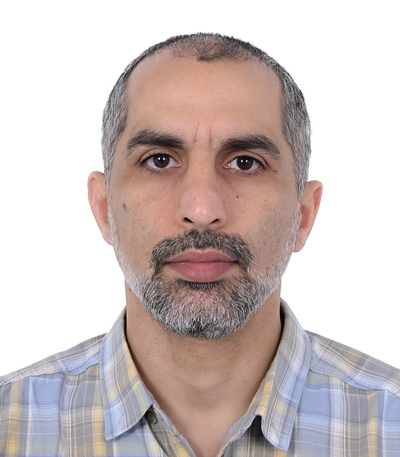
Sauleh Eetemadi
Assistant Professor, Computer Science Department, College of Engineering and Physical Sciences
“Drawing on my experience in AI, natural language processing and applied healthcare research, I am excited to lead KAMAL Health in developing a bilingual, multimodal and agentic health assistant tailored to the UAE. This project offers a unique opportunity to combine leading research with local clinical insight to make trustworthy, personalised health support more accessible to Arabic- and English-speaking communities.”
The proposed project aims to develop "KAMAL Health” (Knowledge-Augmented Muli-Modal Arabic LLMs for Healthcare), an advanced bilingual, multi-modal medical platform designed in alignment with the local needs of the United Arab Emirates, supporting Arabic as well as English. In addition to text-based chat, KAMAL Health will also support voice-mode with enhanced accessibility to the diverse diaspora of the UAE, making healthcare more accessible and personalized.
KAMAL Health will integrate neuro-symbolic AI approaches, combining the capabilities of large language models (LLMs) with classical machine learning methods, ensuring high-quality, transparent, and interpretable medical recommendations. The current landscape of healthcare AI models lacks robust solutions for multi-modal personalized medical recommendations and speech-based health diagnostics and are primarily focused on English. KAMAL Health directly addresses this gap by creating specialized, innovative models that combine deep learning techniques with medical domain expertise to create a platform that provides context-aware healthcare consultations and provides information about local doctors and hospitals when appropriate. Additionally, KAMAL Health introduces voice-mode, i.e. the ability to interact with the user in Arabic via verbal communication, in addition to textual communication, which is not readily available in current platforms.
The inclusion of both English and Arabic makes this platform a unique solution for Dubai's highly diverse population, promoting inclusivity and improving public health for residents across linguistic divides. The project will serve as a key enabler of AI-driven healthcare innovation, improving accessibility to medical services, and reducing the strain on healthcare providers as well as easing mental anxiety of patients with relatively benign ailments. It will also create new opportunities for further research in AI healthcare technologies and have a cross-sectoral impact on related clinical applications. Additionally, KAMAL Health brings a strong potential for commercialization of the bilingual models and sets a precedent for the integration of AI in public health systems.