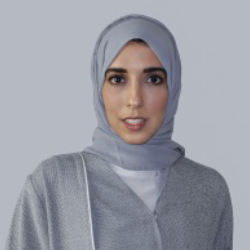
Sumaya Almansoori
Human Genetics College of Medicine
"It is an exciting privilege to lead an international project that applies cutting-edge AI tools to genomic data from our region, and other populations around the world, to address one of the most pressing health challenges of our time. I believe this work will set new standards for equity, innovation, and real-world impact in precision healthcare."
The application of a precision medicine approach to cardiometabolic diseases (CMDs) could make a very significant difference to the health and longevity of the global population, and be particularly relevant to the Middle East, where cardiovascular diseases, type-2 diabetes, and obesity present a particularly high and rising challenge. This important healthcare advance is constrained, however, by a historical focus on the study of populations of European ancestry, limiting its relevance and effectiveness in under-researched populations (including those of the Middle East). Our research aims to address this problem, paving the way for efficiently-targeted, precision prevention and treatment of CMDs in non-European populations.
We have brought together a world-leading team of researchers to address this critical research gap, leveraging large-scale genomic and phenotypic datasets from international and regional biobanks, together comprising data from over 1.1 million people. Using machine learning and interpretable artificial intelligence (AI) methods, we will decode ancestry-specific gene-environment (GxE) interactions that influence CMD risk in specific population groups.
The study is structured around four core objectives: (1) enhancing genetic discovery in underrepresented populations, (2) modelling complex GxE interactions, (3) developing multi-ancestry, AI-driven predictive models, and (4) generating actionable evidence for precision prevention.
This work directly supports the UAE national genome strategy and the country’s broader ambition to lead in AI-enabled health innovation. It will strengthen national research capacity, consolidate global research partnerships, promote equitable genomics, and contribute to a regional shift toward proactive, personalized healthcare driven by data, diversity, and discovery.