Advancing Sustainable Cooling: Development of efficient Indirect Evaporative Cooling and AI/ML based building Energy optimisation in the UAE.

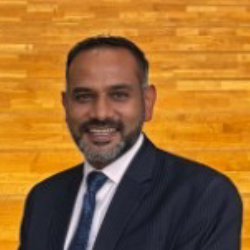
Person Photo

Dr. Hassan Ali

Associate Professor, Program Director, M.Sc. Renewable Energy Engineering, School of Chemical Engineering, College of Engineering and Physical Sciences, University of Birmingham, Dubai.

"Chilling the Heatwave: Pioneering Eco-Innovations in Sustainable Cooling and AI-Driven Building Energy Management for smarter and greener buildings in the UAE."

The project titled “Advancing Sustainable Cooling: Development of efficient Indirect Evaporative Cooling and AI/ML based building Energy optimisation in the UAE,” is led by Hassan Ali and Archibong Eso at the University of Birmingham Dubai (UoB Dubai). This project is in collaboration with Omer Rana and Ioan Pteri from Cardiff University (UK) to integrate Indirect Evaporative Cooling (IEC) technologies with AI/ML-driven semantic digital twins for enhanced building energy efficiency. Focused on UAE’s hot, arid climate where cooling consumes 50-70% of building energy and contributes around 40% to national CO2 emissions, the initiative aims to reduce reliance on energy-intensive vapor compression systems (VCS) by 40-70%, achieving significant savings in energy/water via predictive optimization.

The project shall focus on designing, simulating and fabricating modular IEC prototypes using locally sourced polymeric materials for 3-5 heat/mass exchanger designs, targeting 26°C temperature drops and dew-point effectiveness of 0.8. Also, we shall be developing AI/ML digital twins for accurate energy forecasting and FPGA-accelerated HVAC control, yielding significant savings. These tools shall help to optimise HVAC controls, manage demand response, conduct real time predictive maintenance and reduce peak load energy demands.

Supported by contributions from industry partners in UAE such as SEE Institute Dubai, Clean Energy Business Council, IES (Integrated Environmental Solutions), Emicool and Aldar. It aligns with Dubai Future Foundation’s priorities in cognitive cities, including sustainable urban development, urban informatics, resource optimization, and digital twins. The project fosters net-zero strategies, scalability for retrofits/new builds, and wider stakeholder engagement.