AI/IoT-Driven, Energy-Autonomous Direct Air Capture for Urban Climate Resilience in Dubai

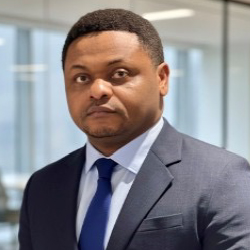
Person Photo

Archibong Archibong

Associate Professor & Programme Director of Mechanical Engineering School of Engineering, College of Engineering & Physical Science, University of Birmingham Dubai

"As Principal Investigator, I bring extensive experience in multiphase flow, carbon capture, sustainable process design, and a deep passion for advancing AI-driven low-carbon technologies. Having received funding under the Dubai RDI Grant Program initiated by the Dubai Future Foundation, my team and I are committed to advancing this pioneering project in AI-enhanced, Energy-autonomous Direct Air Capture. Together, we are committed to translating fundamental research into scalable carbon removal solutions that embody Dubai’s vision for a sustainable, net-zero future."

The AI/IoT-Driven, Energy-Autonomous Direct Air Capture(DAC) project seeks to transform carbon removal by integrating artificial intelligence, advanced materials, additive manufacturing, and renewable energy into a unified, self-optimising system. Building on expertise in multiphase flow, adsorption science, carbon capture, digital twins, and sustainable process design from the collaborating institutions led by the University of Birmingham Dubai, the project will develop a new generation of DAC units capable of capturing atmospheric CO₂ while operating independently from the electrical grid.

At its core, the system will employ intelligent control algorithms that continuously learn from operational data to optimize CO2 capture, air flow distribution, energy use, and sorbent regeneration scheduling in real time. The project will combine solar-powered energy modules with adaptive AI-driven control systems to create an energy-autonomous DAC platform suited to the climatic conditions of the UAE and other arid regions. Through the coupling of computational modelling with experimental validation, the team will design, fabricate, and test modular DAC prototypes that minimise power demand while maximising capture efficiency.

This interdisciplinary effort brings together academic and industry experts in engineering, artificial intelligence, digital twins, and sustainable energy systems to push the boundaries of carbon capture innovation. The project directly supports Dubai’s ambition to become a global hub for clean technology and climate innovation under the Dubai 2040 Urban Master Plan and UAE Net Zero 2050 strategy.

This project will culminate in the team delivering a proof-of-concept DAC prototype and a digital twin framework for predictive performance optimisation and scalability assessment. The outcomes will provide a technological and intellectual foundation for future large-scale deployment of AI-enhanced DAC systems across the region, contributing meaningfully to the global effort toward carbon neutrality.